Roles in Toastmaster
- Lucy Ebbitt
- Mar 9
- 3 min read

The Roles That Make a Toastmasters Meeting Work
One of the things that makes a Toastmasters meeting both structured and engaging is that everyone has a role to play. Rather than simply watching a few speakers, members actively contribute to the meeting by taking on different responsibilities.
At Headingley Speakers, these roles help meetings run smoothly while giving members the chance to practise a wide range of communication and leadership skills. Whether you’re organising the meeting, delivering a speech, or listening carefully to evaluate others, every role helps everyone learn.
Here’s a guide to the key roles you’ll see in a typical Toastmasters meeting.

Toastmaster of the Evening
The Toastmaster is the meeting’s host and guide. They introduce the meeting, explain the agenda, and link together the different parts of the session.
Think of the Toastmaster as the event presenter. Their role includes:
Introducing speakers and role holders
Keeping the meeting flowing smoothly
Providing energy and enthusiasm throughout the session
It’s a great role for developing confidence in leading a room and managing an event.
Speaker
Speakers deliver prepared speeches, usually as part of the Toastmasters Pathways learning programme.
Each speech has a specific objective, such as:
Structuring a clear message
Using storytelling techniques
Improving vocal variety or body language
Speakers are supported by the club through encouragement and detailed feedback from evaluators.
Evaluator
Every speaker receives a speech evaluation from another member. The evaluator listens carefully to the speech and provides constructive feedback.
A good evaluator will:
Highlight what the speaker did well
Offer practical suggestions for improvement
Encourage the speaker’s continued growth
Evaluation is one of the most valuable learning experiences in Toastmasters because it strengthens both listening and analytical skills.
Timer
The Timer keeps track of how long each speaker and evaluator speaks. Time limits are important in Toastmasters because they help speakers learn to structure their message effectively.
The timer usually signals time using coloured cards or indicators:
Green: minimum speaking time reached
Amber: approaching the time limit
Red: maximum time reached
This role helps members become more aware of pacing and time management.
Grammarian
The Grammarian acts as the meeting’s language observer. They listen for interesting or effective use of language throughout the meeting.
Their responsibilities include:
Noting strong vocabulary or creative phrasing
Highlighting language improvements where helpful
Introducing a “Word of the Day” to encourage varied vocabulary
Occassionally the 'ah' counter, where they count the use of filler words
It’s a great role for developing awareness of how language shapes communication.
Table Topics Master
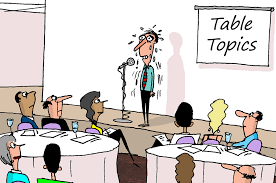
The Table Topics Master runs the impromptu speaking section of the meeting.
They prepare short questions or prompts and invite members (and sometimes guests) to respond with a brief, spontaneous speech. These responses typically last one to two minutes.
Table Topics help members:
Think quickly
organise thoughts under pressure
practise speaking without preparation
It’s often one of the most lively and entertaining parts of the meeting.
Table Topics Evaluator
Just like prepared speeches, impromptu speeches can also benefit from feedback. The Table Topics Evaluator listens to the Table Topics responses and provides short evaluations.
They may comment on:
How well the speaker addressed the question
The structure of the response
Engaging moments or effective storytelling
This role encourages careful listening and concise feedback.
General Evaluator
The General Evaluator oversees the entire evaluation portion of the meeting.
Their role includes:
Evaluating the evaluators
Commenting on how well the meeting was organised
Inviting reports from the Timer and Grammarian
They provide an overall reflection on how the meeting went and highlight areas where the club performed particularly well.
Learning by Doing
One of the unique aspects of Toastmasters is that members learn by actively participating. By rotating through different roles, everyone develops a wide range of skills — from leadership and organisation to listening and communication.
At Headingley Speakers, these roles create a supportive environment where every meeting becomes an opportunity to
practise, improve, and enjoy the journey of becoming a more confident communicator.


Comments