How to Give a Great Table Topic at Toastmasters
- Lucy Ebbitt
- May 21
- 3 min read

For many people, Table Topics are both the most terrifying, and the most exciting, part of a Toastmasters meeting.
One moment you’re sitting comfortably in your seat… and the next you’re invited to stand up and speak on a surprise topic with little or no preparation.
But here’s the secret: Table Topics are not about giving a perfect answer. They’re about learning to organise your thoughts quickly, speak with confidence, and enjoy thinking on your feet.
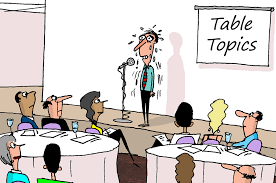
At Headingley Speakers, Table Topics are one of the best ways to grow as a communicator in a supportive and low-pressure environment.
What Are Table Topics?
Table Topics are short impromptu speeches, usually lasting between one and two minutes.
The Table Topics Master asks a question or gives a prompt, and the speaker responds immediately. Topics can be:
Thought-provoking
Funny
Personal
Imaginative
Seasonal or themed
For example:
“If you could relive one day in your life, which would it be?”
“What skill do you wish schools taught more often?”
“Would you rather travel to the past or the future?”
The aim isn’t expert knowledge, it’s spontaneous communication.
The Key to a Good Table Topic: Structure
The biggest mistake people make is trying to say everything that comes to mind.
Instead, keep it simple.
Even a short impromptu speech benefits from a clear structure:
Opening
Main idea or story
Conclusion
A quick structure helps you sound organised, even if you’re thinking on the spot.
For example:
Answer the question directly
Give a short example or story
Finish with a final thought or takeaway
Simple structure creates confident speaking.
Take a Moment Before You Speak
You don’t need to answer instantly.
It’s perfectly acceptable to pause briefly, smile, and gather your thoughts before beginning. In fact, a short pause often makes you appear calmer and more confident.
A few seconds of thinking can save a minute of rambling.
Use Personal Stories
One of the easiest ways to give a strong Table Topic response is to make it personal.
You don’t need expert facts or complicated arguments. Personal experiences are:
Easier to remember
More natural to speak about
More engaging for the audience
If the topic is unexpected, ask yourself:
“What does this remind me of?”
Usually, a simple story is enough.
What to Include
Strong Table Topics often include:
A clear answer or opinion
A simple structure
Personal examples or stories
Energy and enthusiasm
A clear ending
Humour can also work well, especially when it feels natural.
What to Avoid
Trying to Be Perfect
Table Topics are practice, not performance. Audiences care more about authenticity and confidence than flawless wording.
Speaking Too Fast
Nerves often make people rush. Slow down, breathe, and allow your ideas room to land.
Overcomplicating Your Answer
You only have a short amount of time. One clear idea is usually enough.
Apologising
Avoid opening with:
“I’m bad at this…”
“I have no idea what to say…”
Just begin confidently. Most audiences won’t notice your nerves as much as you think.
Going Off Topic Completely
Creativity is welcome, but remember to answer the question in some way.
The Real Purpose of Table Topics
Table Topics are not designed to catch people out. They exist to help members become more comfortable speaking in unexpected situations.
And those situations happen everywhere:
Job interviews
Meetings
Networking conversations
Social situations
Presentations and Q&A sessions
The confidence you build through Table Topics carries into everyday life.
Everyone Improves With Practice
Nobody starts out as a brilliant impromptu speaker. Like every Toastmasters skill, it improves with practice.
At Headingley Speakers, Table Topics are supportive, encouraging, and often the most entertaining part of the evening. Members quickly discover that the fear fades and confidence grows faster than expected.
Final Thought
The goal of Table Topics isn’t to deliver the perfect speech.
It’s to stand up, speak up, and trust yourself.
And sometimes, that first unexpected minute at the front of the room becomes the moment someone realises:
“I can actually do this.”


Comments