How to Be an Effective Toastmasters Grammarian
- Lucy Ebbitt
- Apr 29
- 3 min read

Among all the roles in a Toastmasters meeting, the Grammarian is often one of the most misunderstood, and one of the most powerful for improving communication.
At Headingley Speakers, the Grammarian isn’t there to “catch people out” or police grammar. Instead, the role is about raising awareness of language, celebrating effective communication, and helping everyone become more thoughtful speakers.
Done well, it can transform how members listen, speak, and express ideas.
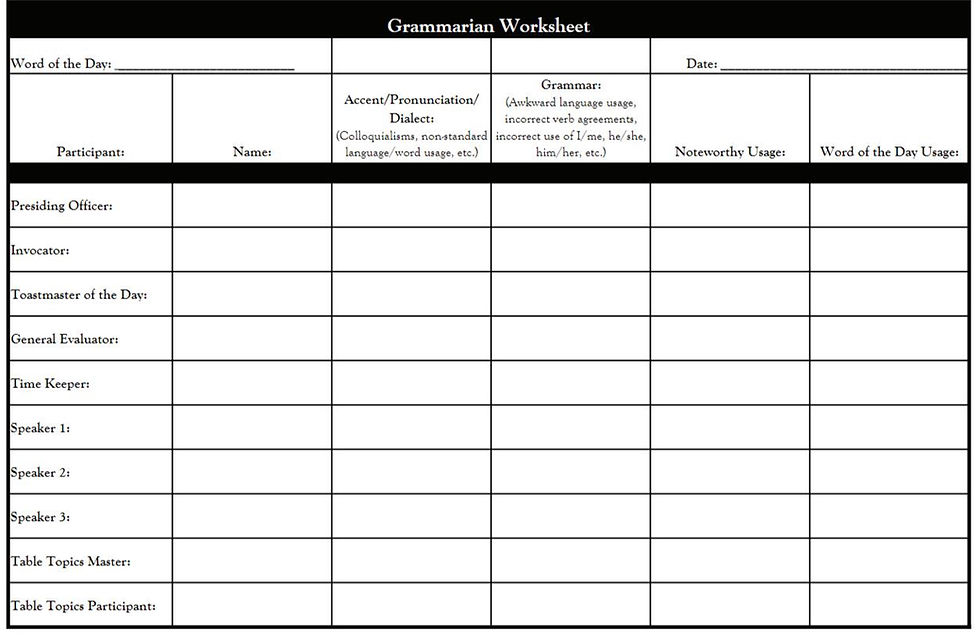
What Does the Grammarian Do?
The Grammarian has three main responsibilities:
Listening for effective and creative use of language
Noting areas where language could be improved
Introducing and tracking the Word of the Day
It’s a role that sharpens your attention to detail and helps the whole club become more intentional with words.
Start With the Word of the Day
One of the most enjoyable parts of being Grammarian is choosing the Word of the Day.
A good Word of the Day should be:
Useful in everyday conversation
Slightly challenging (but not obscure)
Easy enough to include naturally in a sentence
For example, words like “resilient,” “insightful,” or “adapt” work well. Extremely technical or rarely used words can make it harder for members to participate.
At the start of the meeting, you’ll:
Introduce the word
Explain its meaning
Use it in a sentence
Encourage members to try it during the meeting
Throughout the session, you’ll listen for who uses the word, and how effectively.
Listen for What Works
A great Grammarian doesn’t just focus on mistakes. In fact, the most valuable insights often come from noticing what speakers do well.
Pay attention to:
Vivid or descriptive language
Strong word choices
Effective phrasing or metaphors
Clear and concise expressions
When you highlight these moments, you help others learn what good communication sounds like.
For example:
“I really liked the phrase ‘a ripple effect of small actions’, it created a clear and memorable image.”
This kind of feedback encourages everyone to be more intentional with their language.
Offer Gentle Improvements
Of course, part of the role is also to notice opportunities for improvement. This might include:
Repeated filler words (e.g. “um,” “uh,” “like”)
Grammatical errors
Overly complex or unclear sentences
The key is how you deliver this feedback.
Keep it:
Supportive, not critical
General rather than targeting individuals too harshly
Focused on helping, not correcting
For example:
“I noticed a few filler words creeping in, something we all do, and reducing those could make the message even clearer.”
This keeps the tone positive and inclusive.
Take Clear Notes
During the meeting, jot down examples as they happen. Try to capture:
Specific phrases or word choices
Who used the Word of the Day
Patterns (e.g. frequent filler words across multiple speakers)
These notes will help you give a clear and structured report at the end.
Deliver a Helpful Grammarian Report
At the end of the meeting, you’ll present your Grammarian report. A strong report usually includes:
A reminder of the Word of the Day and who used it
A few highlights of effective language
General observations on areas for improvement
Keep it concise, balanced, and encouraging. The goal is to leave members feeling informed and motivated, not criticised.
Why the Grammarian Role Matters
The Grammarian helps everyone become more aware of how they use language, which is something that often goes unnoticed.
By taking on this role, you’ll:
Improve your own vocabulary and clarity
Become a more attentive listener
Develop the ability to give thoughtful, balanced feedback
And perhaps most importantly, you’ll help create a club culture where words are chosen with care and used with purpose.
Final Thought
Great speaking isn’t just about confidence or structure, it’s about the words we choose and how we use them.
As Grammarian, you help shine a light on that.
And in doing so, you help everyone at Headingley Speakers become not just better speakers but better communicators.


Comments